FRP Well Suited for Potash Mining Equipment
It has been demonstrated many times over that modern Fiber Reinforced Polymers (FRP) are extremely durable in a myriad of applications. Furthermore, FRP have tremendous promise in a wide range of industrial applications, such as potash mining. Chief among the many benefits of FRP are corrosion resistance and long life cycles in extremely stringent environments—for example, chemical processing, mining and minerals, and pulp and paper.
In contemporary societies, in both industrial and non-industrial applications, we rely on complex systems of infrastructure for safety, prosperity, and economic health. The use of FRP in complex industrial has with time become more widely adopted due to their ability to withstand the harshest environments. According to an educational module released in 2006, prepared by ISIS Canada, a Canadian Network of Centers of Excellence, titled “Durability of FRP Composites for Construction,” a primary motivation for using FRP in civil engineering applications is that FRP are non-corrosive and thus they will not degrade in electrochemical environments.
Potash mining is often conducted in a low pH high chloride environment where variables such as temperature, humidity, exposure to moisture, water, and caustics are important considerations. FRP are viewed by many as excellent construction materials that will provide protection against caustics, acids, and continuous wet or humid conditions.
In today’s world potash refers usually just refers to potassium chloride. Potash has a key role production of fertilizer (its one of the three essential nutrients that plants need for healthy growth) and thus in food production, and is one of the crucial ingredients of the world economy. Approximately 75%-85% of the world’s potash production is used for fertilizer. The rest is used in various chemical processes.
According to a March 19, 2013 web based article published from mining.com, titled “Inventories Up, Prices Down,” demand is up for North American potash on domestic and export markets. In February worldwide potash exports were up 26% to 812,000 tones from one year previous. Furthermore, potash producers remain optimistic as crop prices rise, farmers are willing to spend more on fertilizer.
With global population rising and improving diets in developing countries- potash production and other nutrients such as nitrogen and phosphorus are expected to increase. This is welcome news for FRP producers. FRP are viewed by many as a great material choice for both conventional shaft mining and solution mining applications of potash because of its inherent properties; corrosion and abrasion resistance, long service life, low maintenance, ease of installation, and cost-effectiveness. From tanks to pipe, from structural shape to custom components—FRP possess a portfolio of benefits unrealized by other conventional materials.
 There are many
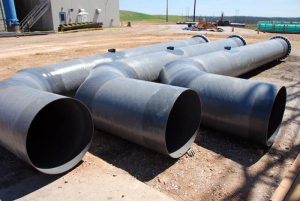 There are many important predictors of service life in industrial chemical processes; for example, humidity, temperature, pressure, and stress. Similarly, chemical resistance is a key predictor of
  In our
 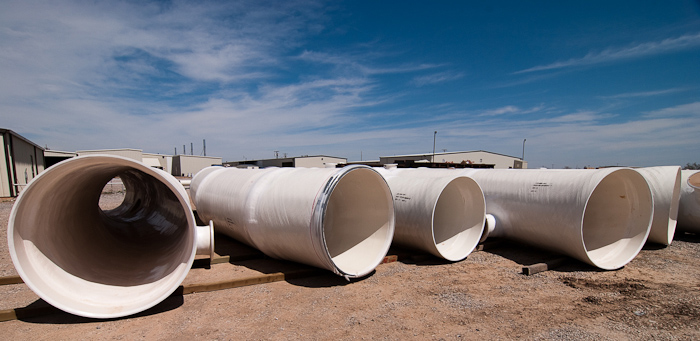 If you’ve been paying attention to fiberglass trends you’d know that corrosion, a serious problem that pits and corrodes most metals and metal alloys, has created huge market opportunities for Fiber Reinforced Polymers (FRP) including pipe, duct, and tanks. Despite the many opportunities FRP manufactures have seized over the years, some major obstacles still persist, chief among them is education—or getting the word out.
 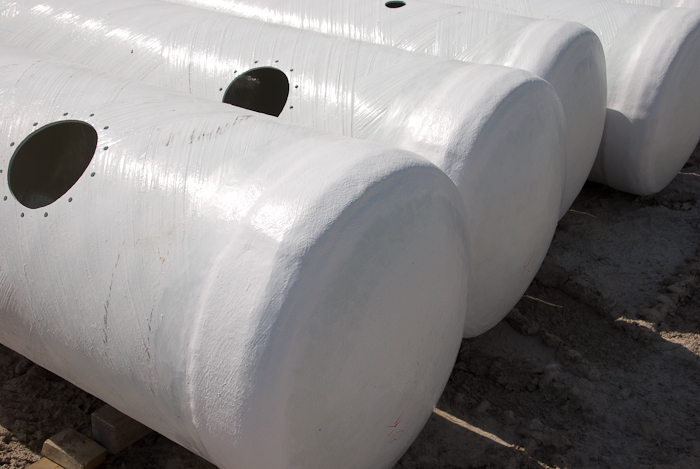 Ferric chloride or FeCl3, is an industrial scale commodity chemical compound that has many important industrial applications. When dissolved in water, FeCl3 undergoes hydrolysis and gives off heat in an exothermic reaction. The resulting brown, acidic, and corrosive solution is used as a flocculant in sewage treatment and drinking water production, and as an etchant for copper-based metals in printed circuit boards.
 There are many